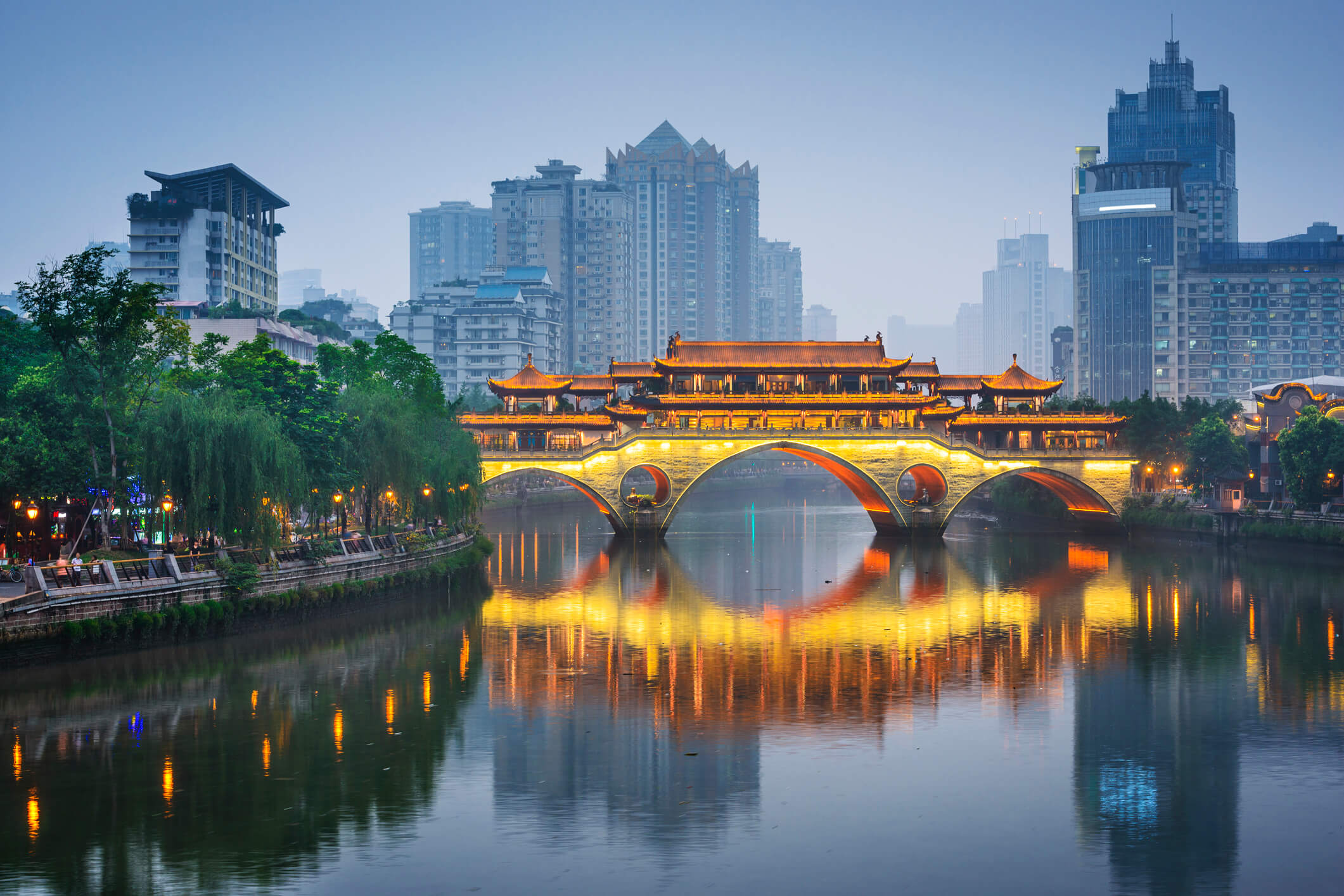
Chengdu is the easygoing capital of Sichuan and one of China's most loved cities — the land of giant pandas, mouth-numbing hotpot and an unhurried teahouse culture that locals have turned into an art form. Laid-back, leafy and endlessly sociable, it pairs a 2,000-year history with a buzzing modern food-and-nightlife scene, and has become one of the most popular places in the whole country to live and teach.
Chengdu has a mild, humid subtropical climate, often cloudy, with hot summers, gentle winters and plenty of green. It is home to one of China's largest and most welcoming expat communities, with English widely used in its universities and international schools. Mandarin (and the local Sichuanese dialect) is the language of daily life, but a famously relaxed pace, a very low cost of living and superb transport links make it an incredibly comfortable, fun and affordable city to call home.
Location Info
- One of China's largest, friendliest expat communities and a relaxed pace of life
- Very safe, with low street crime even late at night
- Extensive, cheap metro plus high-speed trains across the southwest
Top Experiences
Giant Panda Breeding Base
Meet Chengdu's most famous residents at this leafy research base, where you can watch giant and red pandas munch bamboo and tumble about — go early in the morning when they're at their most active.
People's Park & Teahouse Culture
Sink into a bamboo chair, order a bottomless cup of green tea and get your ears cleaned the traditional way at Heming Teahouse — the beating heart of Chengdu's famously laid-back lifestyle.
Jinli & Kuanzhai Alleys
Wander these restored old lanes of grey-brick courtyards, lantern-lit bars, snack stalls and craft shops — touristy but irresistible, and best after dark.
Sichuan Hotpot & Spicy Food
Chengdu is a UNESCO City of Gastronomy. Brave the tongue-tingling mala hotpot, mapo tofu and dan dan noodles — the spicy, numbing food here is reason enough to move.
Mount Qingcheng & Dujiangyan
A short trip from the city brings you to a sacred Taoist mountain of misty temples and forest trails, beside the 2,000-year-old Dujiangyan irrigation system — both UNESCO sites.
Leshan Giant Buddha
Take the high-speed train for a day trip to the world's largest stone Buddha, a 71-metre giant carved into a riverside cliff over a thousand years ago.
Getting Around
Chengdu is big but beautifully connected. Its sprawling metro is modern, cheap and signed in English, complemented by buses and shared bikes everywhere, while Didi (China's ride-hailing app) and metered taxis cost very little. High-speed trains fan out across the southwest, reaching Chongqing and beyond in around an hour. Almost everything is paid for by phone with WeChat Pay or Alipay, so it's worth setting these up soon after you arrive.
When to Go
Spring (March to May) and autumn (September to November) are the most comfortable, with mild, pleasant days. Summers are hot and humid, winters are cool, grey and damp rather than freezing, and Chengdu's famously cloudy skies mean sunshine is something to celebrate whenever it appears.
Good to Know
- The Chinese yuan (CNY/RMB) is the currency, and Chengdu is wonderfully affordable.
- Mandarin is the official language and everyday English is limited, so a translation app is invaluable.
- Almost all payments are by phone — set up WeChat Pay or Alipay early.
- A VPN is needed for many Western sites and apps, so arrange one before you arrive.
- Chengdu is extremely safe, with very low rates of street crime.
- The whole country runs on China Standard Time (GMT+8).