Dublin is Ireland's warm-hearted, history-rich capital — a compact, walkable city on the River Liffey where Georgian squares and medieval cathedrals sit alongside literary pubs, a booming tech scene and some of the friendliest locals you'll ever meet. Steeped in writers, music and craic, it pairs big-city culture with a village-like charm, and the green hills and wild coast of Ireland sit right on its doorstep.
Dublin has a mild, changeable maritime climate — rarely very hot or very cold, but often grey and showery, so locals joke about getting "four seasons in a day." English is the everyday language (alongside Irish), making it an unusually easy place to settle, and it is home to a large, diverse international community drawn by its universities and the European headquarters of the world's biggest tech firms. The cost of living is high, but salaries and quality of life are strong.
Location Info
- English-speaking, friendly and easy to settle into, with a big international community
- Safe and very walkable, with green parks and the coast close by
- Compact centre, plus buses, the Luas trams, the DART coastal rail and bike share
Top Experiences
Trinity College & the Book of Kells
Wander the cobbled squares of Ireland's oldest university and gaze at the dazzling 9th-century Book of Kells beneath the breathtaking barrel-vaulted Long Room library.
The Guinness Storehouse
Ireland's most popular attraction tells the story of the black stuff over seven floors, ending with a pint pulled for you in the panoramic Gravity Bar high above the city.
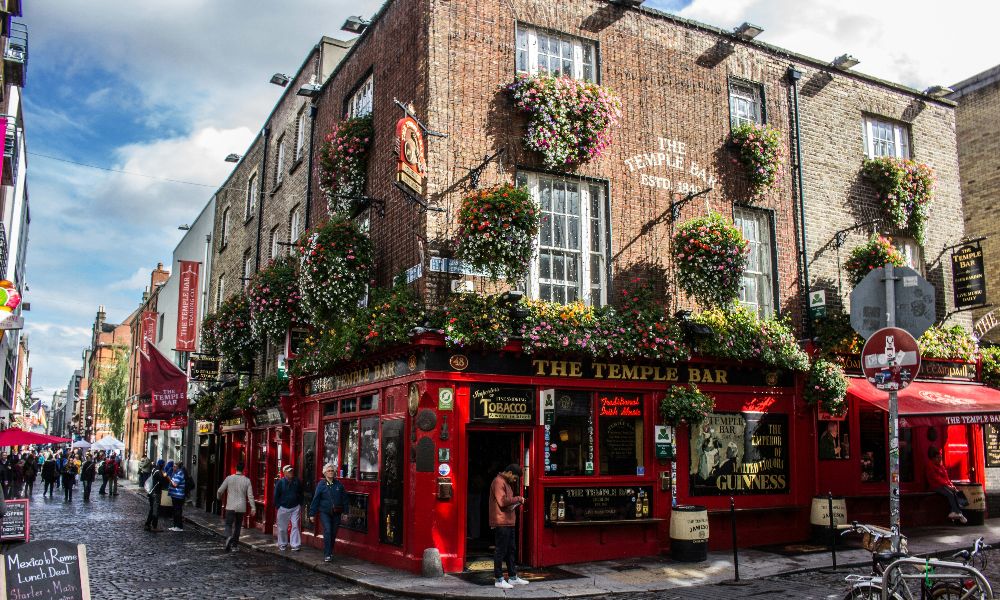
Temple Bar & the Pubs
The cobbled cultural quarter is touristy but irresistible — though the real magic is finding a cosy traditional pub anywhere in town for a pint and a session of live trad music.
Dublin Castle & the Cathedrals
Explore 800 years of history at Dublin Castle, then the soaring medieval St Patrick's and Christ Church cathedrals at the heart of the old city.
Phoenix Park & the Coast
Roam one of Europe's largest city parks, home to wild deer and the president's residence, then hop on the DART to the fishing village of Howth or the beach at Sandycove.
Day Trips & Wild Ireland
Dublin is the gateway to the island — the Wicklow Mountains, the prehistoric tombs of Newgrange and the rugged east coast are all an easy day trip away.
Getting Around
Dublin is compact and made for walking, and its centre is easily crossed on foot. The Luas tram lines and an extensive bus network cover the city, the DART railway runs along the scenic coast, and Dublinbikes are dotted around the centre — all paid for with a single tap-and-go Leap Card. Taxis and ride-hailing are easy to find, though traffic can be slow, so locals tend to walk, cycle or hop on the tram.
When to Go
Late spring and summer (May to September) are the best times, with long, bright evenings, mild temperatures and a packed calendar of festivals — though you should always pack a raincoat. Winters are dark and damp rather than freezing, and the famously unpredictable weather can serve up sun, cloud and showers all in one day.
Good to Know
- The euro (€) is the currency, and Dublin is one of Europe's pricier cities, especially for rent.
- English is the main everyday language, alongside Irish (Gaeilge), making settling in easy.
- Ireland is in the EU but not the Schengen Area, and the city runs on Greenwich Mean Time (GMT).
- Locals are famously friendly — striking up a chat in a pub is practically a national sport.
- Dublin is generally very safe, though keep the usual big-city wits about you late at night.
- The weather is mild but changeable, so layers and a good rain jacket are essential year-round.