
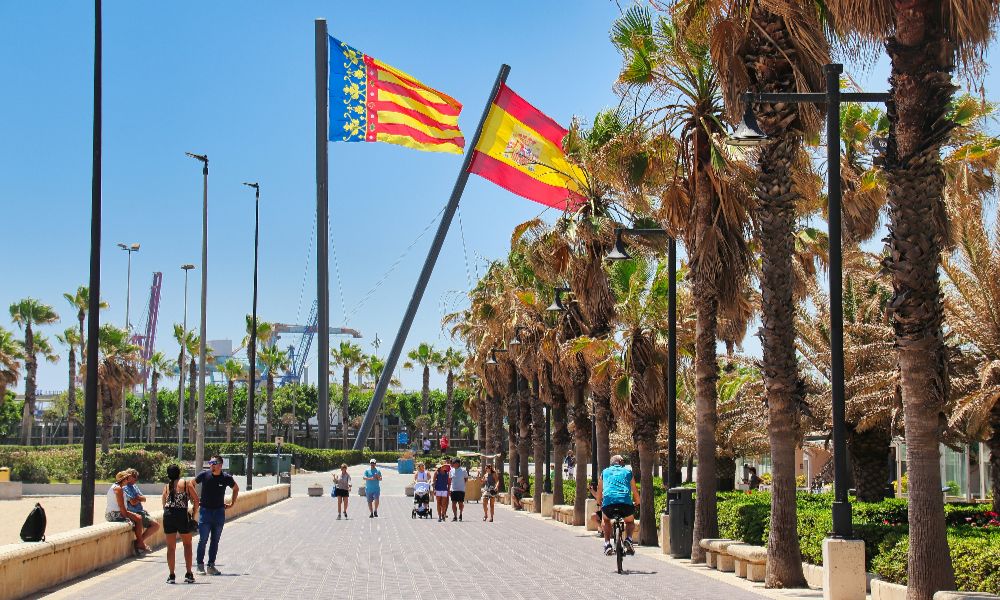
Valencia is Spain's sunny, laid-back third city — a Mediterranean gem where a beautifully preserved medieval old town meets the futuristic, gleaming-white City of Arts and Sciences, all wrapped around a former riverbed turned into a glorious ribbon of park. The birthplace of paella, blessed with golden beaches, an enormous green lung and over 300 days of sunshine a year, it offers the buzz of a big city at a gentler pace — and a lower cost — than Barcelona or Madrid.
Valencia enjoys a warm Mediterranean climate, with hot summers, mild winters and abundant sunshine year-round. It is home to a growing, friendly international community and one of Spain's most relaxed, liveable expat scenes. Spanish and Valencian are both official, but English is widely spoken in business and the city's international schools. Long lunches, late dinners and a famously easygoing, outdoor café culture make it a wonderfully comfortable place to settle in.
Location Info
- Relaxed, sunny Mediterranean city with a lower cost of living than Barcelona or Madrid
- Safe and walkable, with city beaches and a vast park on the doorstep
- An excellent, cheap metro, tram, bus and bike-share network
Top Experiences
City of Arts and Sciences
Santiago Calatrava's spectacular complex of brilliant-white, sci-fi structures — a science museum, planetarium, opera house and Europe's largest aquarium — is the dazzling symbol of modern Valencia.
Turia Gardens
After a flood, the city diverted its river and turned the old bed into a 9km ribbon of parkland looping through the centre — perfect for cycling, jogging and picnics, and the green heart of the city.
The Old Town & Cathedral
Wander the medieval lanes of the Barrio del Carmen to the cathedral, which claims to hold the Holy Grail, and climb the Miguelete bell tower for rooftop views over the old city.
Paella & the Central Market
Valencia invented paella, and there's no better place to eat it. Browse the magnificent Modernista Central Market, one of Europe's largest, then feast on the real thing out by the Albufera lagoon.
The Beaches & the Marina
Soak up the sun on the broad city beaches of Malvarrosa and Patacona, lined with seafood restaurants, then explore the marina that once hosted the America's Cup.
Las Fallas & Day Trips
If you're here in March, don't miss Las Fallas — a wild, week-long festival of giant satirical sculptures, fireworks and bonfires — and use the city as a base for the Albufera, beaches and inland villages.
Getting Around
Valencia is flat, compact and made for cycling, with one of the best bike networks in Spain and the breezy Turia park running right through the middle. Its clean metro, trams and buses cover the city cheaply, all on a rechargeable card, and the historic centre is a joy on foot. Taxis and ride-hailing are easy to find, and high-speed trains reach Madrid in under two hours.
When to Go
Spring (March to June) and autumn (September to October) are glorious, with warm, sunny days and lively festivals — March brings the famous Las Fallas. Summers are hot and humid but tempered by the sea and the beaches, while winters are mild and bright, rarely cold, making it a true year-round city.
Good to Know
- The euro (€) is the currency, and Valencia is noticeably cheaper than Barcelona or Madrid.
- Spanish and Valencian are both official, but English is widely spoken in business and international schools.
- Life runs late — lunch around 2pm, dinner from 9pm, and many shops close for a midday break.
- Spain is in the EU and Schengen Area, and the city runs on Central European Time (GMT+1).
- Valencia is one of Spain's safest big cities, though keep an eye on belongings on the beach.
- Valencians are warm and easygoing — a little Spanish goes a long way.